
Reviewed · FOOD & DRINK
Historical 18th Century Estate Tour with Coconut Tasting
Morne Coubaril Estate turns St Lucia’s plantation past into a hands-on visit. You see replica stick huts, walk through gardens, watch cocoa beans polished by foot, and taste coconut straight from the shell. The sugar mill is still worked by a donkey, which gives the tour a memorable bit of motion and old-fashioned muscle.
I like the fresh tastings, especially coconut water, coconut meat, raw cocoa, and cane juice. I also like the chance to see how much hard work went into food that now arrives neatly packaged in a shop. Guides such as Natasha, Jonathan, Vincia, Noelita, and Sendyann have been singled out for clear, friendly presentations.
The main caution is that the experience can feel rushed or scripted if your guide is less engaged, and the stated duration varies between 30 minutes and one hour. I would plan for about an hour, wear shoes with a good grip, and arrive ready to listen closely during demonstrations.
Key points to know before you go
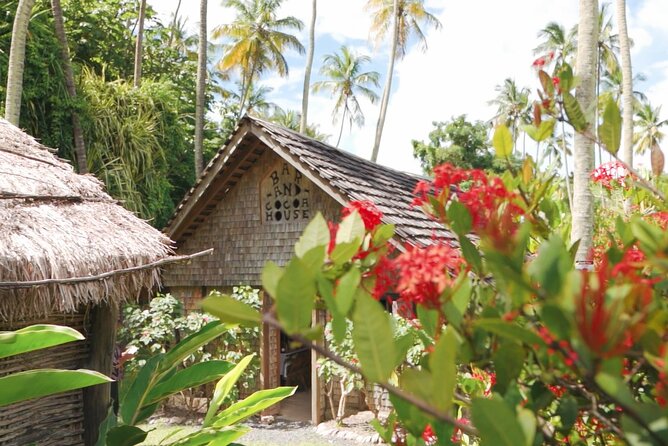
- Cocoa is the star hands-on lesson: You can handle a ripe cocoa bean, see fermentation and drying, watch the cocoa dance used to polish the beans, and see cocoa being ground.
- Coconut tasting is more than a snack: A skilled demonstrator shows how to dehusk a coconut, then serves coconut water and soft coconut meat.
- The estate mixes history with working demonstrations: Replica stick huts, a medicinal herb garden, the grand house, a copra oven, and a donkey-powered sugar mill all fit into the route.
- The $12 price is strong value: Entrance and a local guide are included, with several small tastings along the way.
- The tour is short but not entirely effortless: The grounds involve walking, and the tour is not advised for people with walking difficulties or visual impairment.
- Lunch and rum are separate choices: Lunch, hotel transport, alcoholic drinks, and extra tastings are not included in the basic tour.
What Morne Coubaril tells you about St Lucia
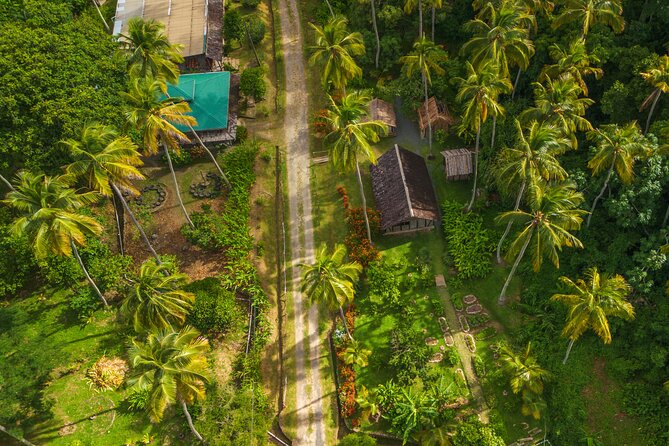
Morne Coubaril is a useful place to begin understanding how plantation life worked in St Lucia. The visit does not rely only on old walls or display cases. It shows the daily labor behind sugar, cocoa, coffee, and coconuts.
That matters because plantation history can feel distant when it is presented only as dates and family names. Here, you see a coconut being opened by hand, cocoa beans being handled and polished, and sugar cane being crushed for juice. Those small demonstrations make the work easier to picture.
The setting near Soufriere also makes this a handy stop if you are already visiting the area. You meet at Morne Coubaril Estate and finish at the same place. There is no hotel pickup or drop-off, so you need to arrange your own way there, but the estate is near public transportation.
The price is about $12 per person, with admission and a local guide included. For that amount, I consider it a good value if you want a compact cultural stop rather than a full-day activity. You receive a guided walk, several demonstrations, garden time, views, and food samples without paying separately for each basic part.
A few more things to do around St Lucia worth a look
- St. Lucia Food and Rum Tour – Taste authentic St. Lucian Food and Culture
★ 5.0 · 204 reviews - St Lucia Rum Tasting and Tour
★ 4.5 · 91 reviews - Rodney Bay Food Tour by LUCIAN FOOD TOURS
★ 5.0 · 76 reviews
Starting among the stick huts
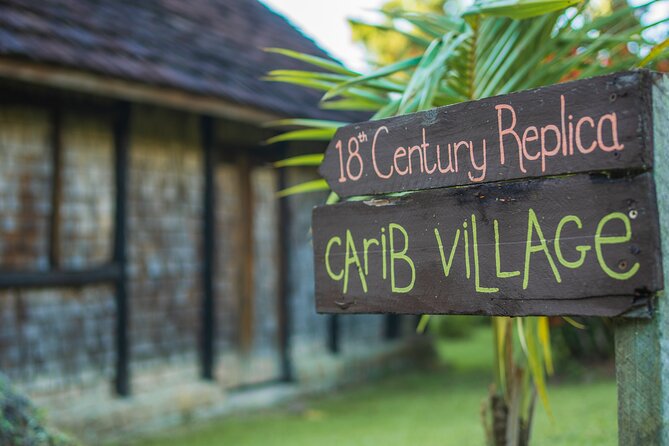
The route begins with a small village made up of replica stick huts. These represent the homes of island residents in the 1700s and give you a visual introduction before the tour moves into the estate grounds.
I find this part useful, but you should keep your expectations in check. The huts are replicas, not untouched historic homes, and at least one past visitor found the presentation too polished. The value is in the explanation of how people lived, not in treating the buildings as original artifacts.
Your guide is meant to provide the story behind the huts and the estate. A good guide will connect the structures to daily life, work, and the local community. Natasha has received particular praise for explaining St Lucian plants, culture, and plantation life, while Jonathan has been noted for answering questions and making the route easy to follow.
If you are placed at the back of a large group, move closer when you can. One complaint about the experience was that the tour moved too quickly and made it hard to hear. Groups can reach up to 100 people, so your position matters.
Walking the gardens and medicinal plants
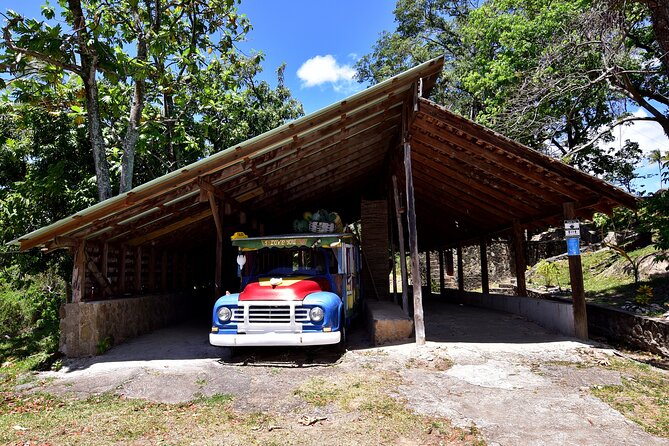
From the village, you move through the estate gardens. The walk brings you past native plants, fruit trees, flowers, herbs, and other vegetation from St Lucia.
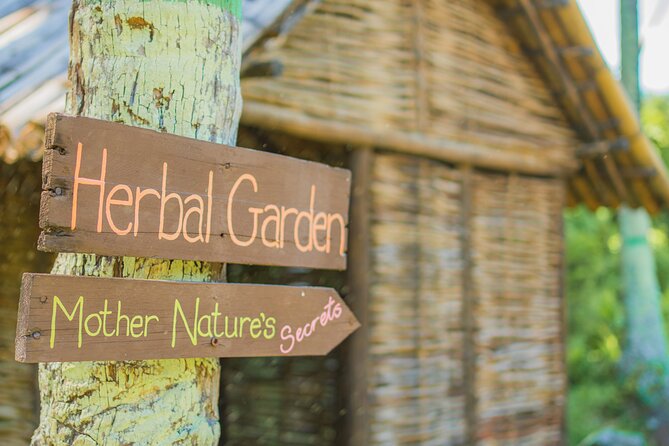
The medicinal herb section gives the gardens a practical purpose. You learn which plants were used for illnesses and injuries, rather than simply being told their names. This is one of the better reasons to pay attention as you walk. The estate becomes a place where food, medicine, and work all meet.
Several guides have been praised for identifying plants and explaining their uses. Natasha is often mentioned for her plant knowledge, and Vincia has been appreciated for sharing information about fruit and vegetation while offering samples. You may also be offered small tastes such as mango, tamarind, basil, or sugar cane, though the exact samples can vary.
This part is outdoors, so rain can affect your comfort. Bring light rain protection if the forecast looks uncertain. The estate has been criticized for not always providing umbrellas or raincoats during wet weather.
The Monplaisir family house
The Monplaisir family’s estate house is the architectural centerpiece of the visit. Its size and design help you picture the difference between the main house and the small workers’ homes shown earlier.
The house is worth seeing even if your main interest is food production. It gives the plantation a human and social setting, showing where the owners lived while labor took place elsewhere on the property.
Keep in mind that this is a guided visit, not a long, room-by-room museum tour. The amount of time spent at the house depends on the group and guide. If you want a detailed architectural history, you may find the visit brief. If you want a clear snapshot of plantation life paired with working demonstrations, it fits well.
Same island, a different sort of day:
- St. Lucia Land and Sea Tour
★ 4.5 · 1,730 reviews - ATV Tour in St Lucia
★ 5.0 · 1,021 reviews - St Lucia Customize Private Island Tour
★ 4.5 · 619 reviews - St Lucia Full-Day Catamaran Sightseeing Cruise With Snorkeling
★ 4.5 · 592 reviews
Coconut dehusking and the tasting stop
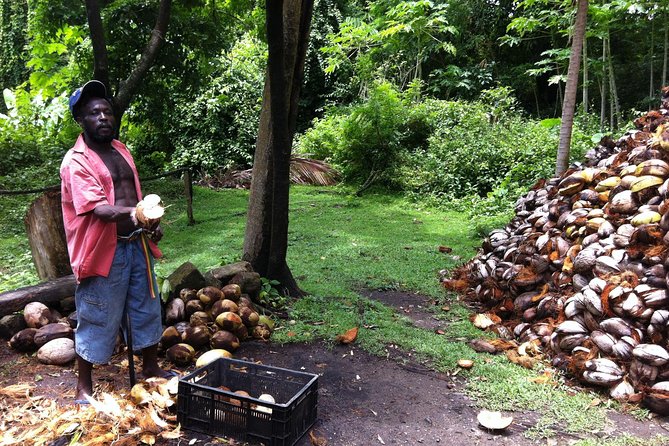
The coconut demonstration is one of the most memorable parts of the experience. You watch an experienced worker remove the tough outer husk by hand, a job that looks simple only after someone highly skilled makes it look easy.
The demonstration also covers how coconut is dried into copra. You learn about the drying process and see how the coconut was prepared for later use. The explanation about drying copra in an oven adds a useful link between the tree, the estate, and the finished product.
Then comes the tasting. You can sample coconut water and the soft coconut meat inside, sometimes described as coconut jelly. This is fresh, direct, and much different from a sweetened coconut product bought in a shop.
The coconut stop is a good reason to take the tour even if you have little interest in plantation architecture. It gives you something to taste and a process to watch. The main limitation is that the basic admission does not include every possible food or drink option offered on the property.
Cocoa, coffee, and the famous cocoa dance
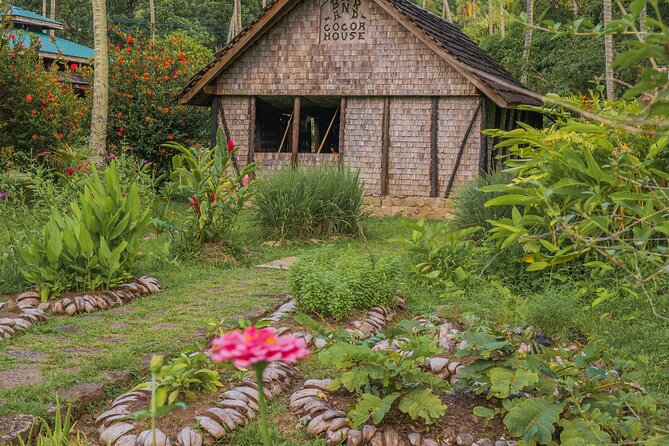
The cocoa and coffee house is where the tour becomes especially useful for anyone curious about chocolate. You can taste a ripe cocoa bean, see the beans being fermented and dried, and watch the cocoa dance used to polish them.
The cocoa dance is a simple but striking demonstration. The beans are polished underfoot, showing the labor that comes before chocolate reaches a factory or shop. You may also see cocoa being ground and sample cocoa nibs or raw cocoa.
Do not expect a chocolate tasting in the style of a specialty confectionery. Raw cocoa has a sharper, more surprising taste than a chocolate bar, and the point is to understand the ingredient before it is sweetened and processed.
The tour can also include coffee processing, although the supplied details focus more heavily on cocoa. If chocolate production interests you, listen carefully here and ask questions when the guide pauses. Guides such as Jonathan and Natasha have been praised for spending time on the process instead of rushing past it.
Extra rum and chocolate tastings may be available separately, but they are not part of the $12 basic experience. Alcoholic drinks cost extra, so do not assume that a general estate tour includes rum.
The donkey-powered sugar cane mill
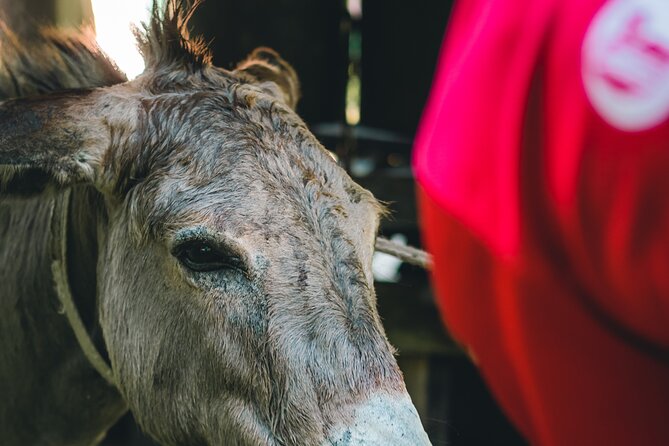
The final working demonstration centers on a traditional sugar cane mill operated by a donkey. The animal turns the mill while the cane is crushed, and you can sip fresh cane juice.
This is a small demonstration, but it ties together the estate’s agricultural story. Sugar cane was not just a crop in the distance. It had to be cut, fed into a mill, and processed with steady physical effort.
The donkey has become part of the visit’s character, but it is also fair to pay attention to how the animal is treated. One past complaint focused on the animal and found the demonstration tedious. For most people, the interest lies in seeing the old machinery work, not in expecting a large show.
Fresh cane juice is a worthwhile taste because it is simple and close to the source. As with the coconut and cocoa samples, the food element helps keep the tour active.
Views, photos, and the pace of the walk
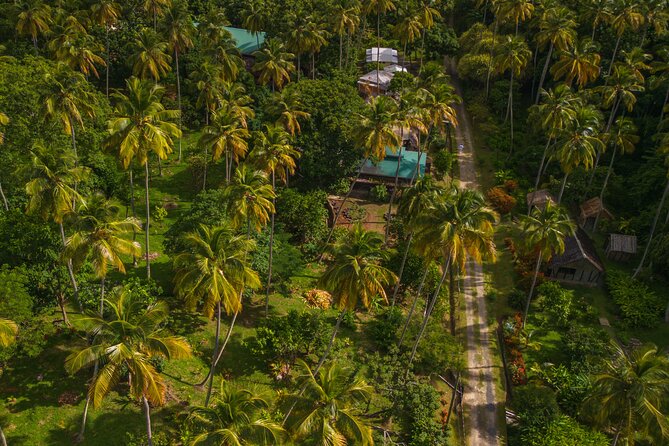
The route includes a viewpoint with broad views over the surrounding area. The property also offers attractive spots for photographs, especially around the gardens, house, huts, and working areas.
The walk is generally described as manageable, but it is not a good choice for someone who has difficulty walking. The tour is also not recommended for people with visual impairments, likely because much of the experience depends on seeing the demonstrations, plants, buildings, and uneven outdoor surroundings.
You may find the walking easy, but the pace can vary. Some groups receive a relaxed explanation at each stop. Others move quickly, particularly when the group is large. I would stay near the guide, ask for clarification if you cannot hear, and avoid assuming that every stop will receive equal attention.
Children must be accompanied by an adult. The tastings and donkey-powered mill can appeal to families, but younger children may have less patience for the historical explanations.
How long the visit really takes
The tour is advertised in conflicting ways, with one description listing about 30 minutes and another describing a one-hour guided visit. The detailed route also refers to a one-hour tour, while the itinerary section assigns 30 minutes to the estate stop.
For planning, I would allow one hour at the estate, plus time to arrive and settle in. A particularly engaging guide may take longer, while a rushed presentation may finish closer to the shorter estimate.
The listed start time is 9:00 a.m. You meet at Morne Coubaril Historical Adventure Park and return to the meeting point at the end. Since transportation is not included, build in enough time to reach the estate without cutting the start close.
Cruise passengers can fit this into a wider island visit, especially if their shore excursion already includes transportation. If you are coming independently, confirm your route to Soufriere before booking.
What the guides can add or take away
The guide is the most important variable. Several named guides, including Natasha, Jonathan, Vincia, Noelita, Sendyann, and Vinia, have been praised for friendly, engaging presentations and strong knowledge of plants, culture, and cocoa processing.
That does not mean every visit will feel the same. Some people have found the talk too scripted or delivered with little energy. Another complaint described an older teen guide who seemed bored. This is worth knowing because the estate itself is attractive, but much of the value comes from how clearly the guide connects each stop.
I would ask questions. Ask why copra was dried, what happens during cocoa fermentation, how the medicinal plants were used, or how the sugar mill worked. A responsive guide can turn a short walk into a memorable lesson. If the group is large, position yourself close enough to hear.
Food, lunch, and extra drinks
The coconut, cocoa, and cane tastings are part of the basic appeal of the visit. Depending on the presentation, you may taste coconut water, coconut meat, cocoa beans, cocoa nibs, sugar cane, tamarind, basil, mango, or coconut candy.
Lunch is not included. The estate may offer a Caribbean or Creole meal for an added cost, but the quality can vary. Some meals have been enjoyed, particularly fish and Creole dishes, while other meals have been considered disappointing. I would treat lunch as a separate decision rather than part of the tour’s value.
Alcoholic drinks are also extra. Rum and chocolate tasting options may be available, but you should not expect them to come with the standard ticket. If you want the simplest and most predictable visit, book the historical tour and consider any food or drink additions only after you understand the extra cost.
Who should book this estate tour?
I would recommend it to you if you want a short cultural stop near Soufriere, enjoy learning through food, or want to see how common Caribbean products were processed before modern equipment took over.
It suits families with adults present, cruise passengers with limited time, and visitors who want more than a scenic photo stop. The $12 price makes it an easy addition to an island day, especially since a guide and entrance are included.
You may want to skip it if you dislike guided groups, need a fully accessible route, or expect an untouched historic plantation with original village buildings. The stick huts are replicas, the tour can feel rehearsed, and the timing may be closer to 30 minutes than one hour.
Book it if you are willing to see the estate as a working history lesson, not a polished museum. Stay close to the guide, protect yourself from rain, and leave room in your schedule for the possibility that the visit runs a little longer.
FAQ
Where does the Morne Coubaril Estate tour begin?
The tour begins at Morne Coubaril Historical Adventure Park, Morne Coubaril Estate, St Lucia.
What time does the tour start?
The stated start time is 9:00 a.m.
How long does the tour last?
The tour information gives both 30 minutes and one hour. Plan for about one hour so you are not rushed.
What is included in the $12 price?
The price includes estate admission and a local guide. The visit includes the guided route and the demonstrations and tastings described for the historical estate tour.
Are coconut and cocoa tastings included?
The tour includes coconut water, coconut meat, and cocoa-related samples such as a ripe cocoa bean. Exact samples can vary during the visit.
Is lunch included?
No. Lunch is not included and may be available to purchase separately.
Is hotel pickup included?
No. Hotel pickup and drop-off are not included. You must make your own way to the estate.
Is the tour suitable for children?
Children can participate, but they must be accompanied by an adult.
Can I cancel for a full refund?
Yes. You can cancel at least 24 hours before the experience start time for a full refund. Cancellations or changes made less than 24 hours before the start time are not refunded.
Just added in St Lucia
- Beaches and Backroads Electric Big-Wheel Scooter Tour★ 3.9 · 8 reviews
- Soufriere Tour – Gems of the West★ 5.0 · 21 reviews
- Private Gros Piton Hike in St Lucia★ 4.0 · 18 reviews
- St. Lucia Botanical Gardens and Waterfall Tour Groups only★ 3.5 · 18 reviews
- St Lucia Private Airport Transfer – Vacation Mode Activated!★ 5.0 · 13 reviews
- Chocolate Decadence St.Lucia★ 4.0 · 17 reviews
- Rainforest Hike & Waterfall Safari St. Lucia From Castries★ 4.5 · 24 reviews
- Beach Shuttle To Pigeon Island★ 5.0 · 12 reviews
Food & Drink, compared.
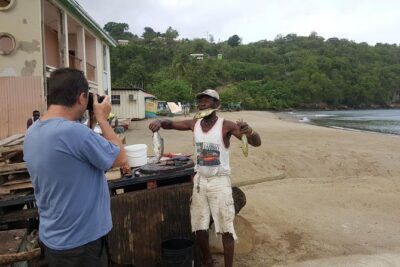
St. Lucia Food and Rum Tour – Taste authentic St. Lucian Food and Culture
Read our review →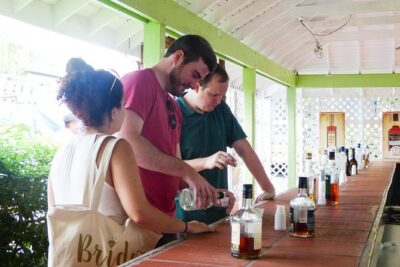

St Lucia Bamboo Rafting Experience (+Rum Tasting)
Read our review →
Soufriere Excursion with Rum & Chocolate Tasting
Read our review →Browse the lists this tour appears in